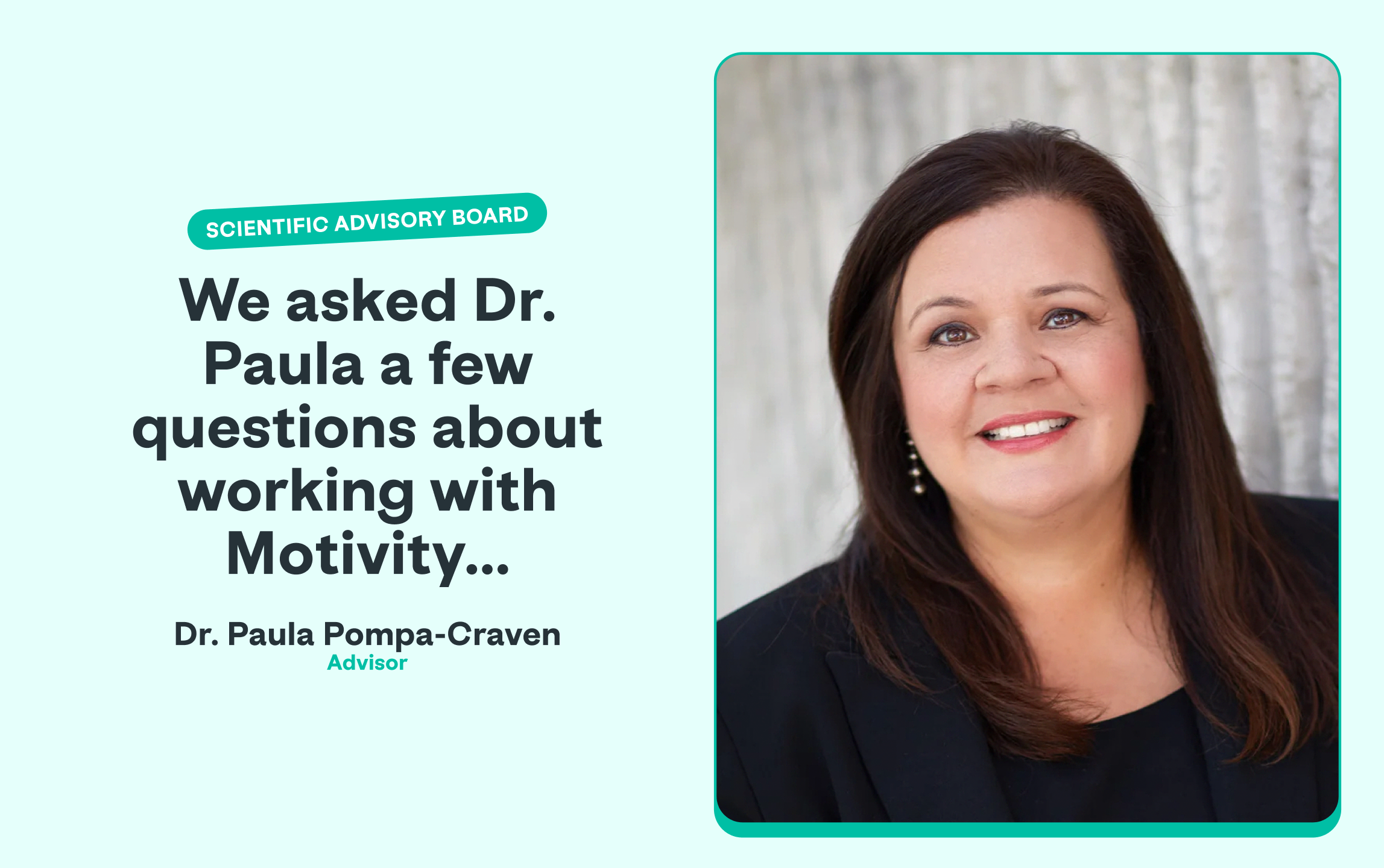
Dr. Paula Pompa-Craven oversees a clinical team of 1,900 professionals at Easterseals Southern California, supporting more than 30,000 autistic individuals and their families each year. When she joined Motivity's Scientific Advisory Board, she brought the operational and clinical perspective of someone who has spent over three decades figuring out how to keep care deeply human at large scale. We sat down with her to talk about what that actually takes and what she thinks technology needs to do better for the field.
What made you want to join Motivity’s Scientific Advisory Board?
Motivity is a good fit for Easterseals Southern California (ESSC). We are well aligned in our dedication to the people we support and the desire to provide tools that lead to quality service delivery. I joined Motivity's Scientific Advisory Board because I believe in the power of collaboration between researchers, clinicians, and technology leaders. Motivity is uniquely positioned to help organizations use data more effectively, and I'm excited to contribute to that vision while helping advance the field as a whole.
Leading a clinical team of 1,900 professionals is a big responsibility. How do you keep the clinical heart and human connection alive at that scale?
One key is remembering that scale doesn't replace relationships, it makes them even more important. Every decision we make, whether it's about operations, technology, or outcomes, must improve the experience of the families we serve and the clinicians who support them. We focus on building a culture of belonging, developing strong leaders, and using data to inform care without losing sight of the human stories behind it. At ESSC we love our Mission Moments, from small but meaningful to large life-changing milestones, each one is important and fuels our passion for the work we do. We love to collect, share and celebrate these milestones.
Over your three decades in the field, what have you found essential for keeping clinicians energized and grounded in their purpose when administrative pressure gets heavy?
Clinicians stay energized when they feel supported, valued, and connected to purpose. No matter how complex the work becomes, we keep bringing the conversation back to the people and the families we support. It is important for leaders to continually look for efficiencies, leveraging technology, streamlining processes, and reducing unnecessary administrative burden so clinicians can spend more time providing mission-driven services.
When you think about Motivity’s role in the future of ABA, what stands out to you most?
What stands out most to me is Motivity's ability to help the field stay both data-driven and person-centered. The future of ABA isn't just about collecting more data, it's about turning data into meaningful insights that improve care, demonstrate impact, and support better decision-making. At the same time, technology should help reduce administrative burden and increase efficiency so clinicians can spend more time focused on the people they serve. I believe Motivity is uniquely positioned to help advance both quality and outcomes across the field
What do you hope this advisory board accomplishes for the ABA field?
I hope the advisory board helps advance a future where ABA is both more effective and more sustainable. That means strengthening the connection between science, technology, and clinical practice so clinicians have better tools, organizations can demonstrate meaningful outcomes, and families receive the highest quality care.
I'm also excited about creating opportunities for greater learning across disciplines. As healthcare and human services move toward more integrated models of care, there is much that ABA can share with other fields about measurement, accountability, and behavior change, and just as much we can learn from disciplines focused on whole-person, family-centered, and coordinated care.
Ultimately, I would like to see us help move the field beyond simply collecting data to using it in ways that improve decisions, reduce burden, foster collaboration, and create greater impact for the individuals and families we serve.